


War heats up used cars in Dubai: 55,000 vehicles flowed into Iran in half a year, and 80% passed through the United Arab Emirates
Category: Industry Insights
Time: 2026-09-03
Summary: War heats up used cars in Dubai: 55,000 vehicles flowed into Iran in half a year, and 80% passed through the United Arab Emirates
Since the outbreak of the conflict on February 28, about 55,000 foreign cars have entered Iran, worth more than 1 billion euros, of which about 70%-80% have entered Iran through the United Arab Emirates...
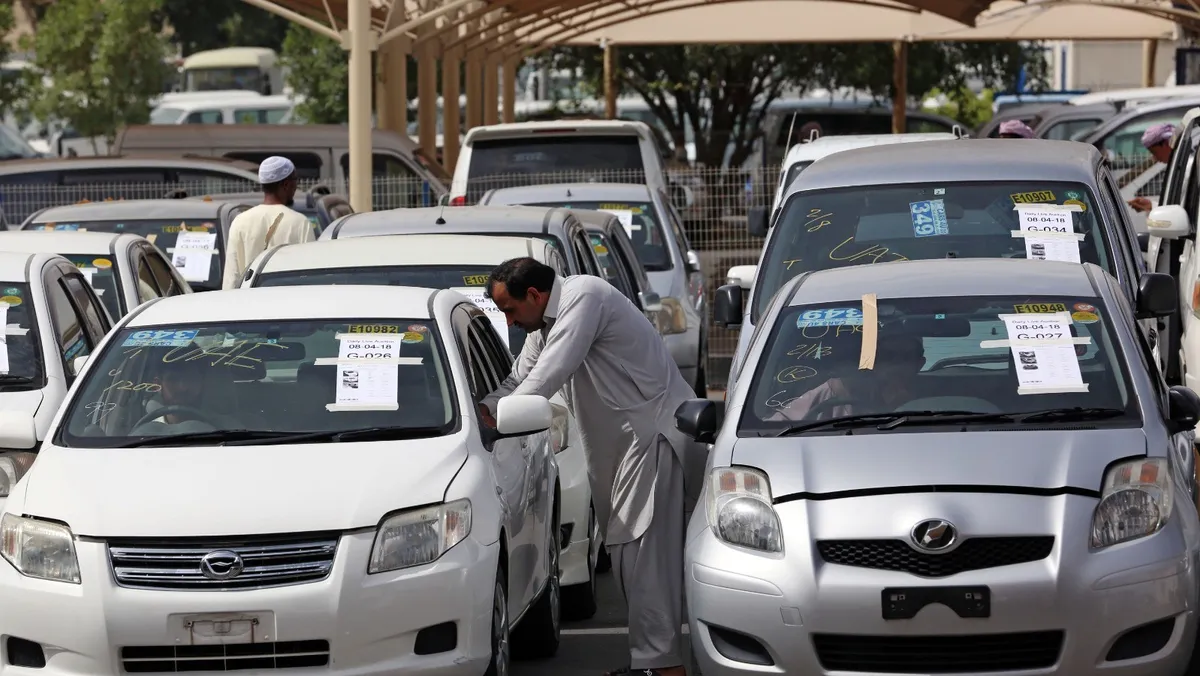
According to a survey by Asharq Bloomberg, the 2026 Middle East conflict not only reshaped regional shipping and energy trade, but also unexpectedly changed the flow of used cars. Since the outbreak of the conflict on February 28, about 55,000 foreign cars have entered Iran, with a value of more than 1 billion euros; combined with data from the Iranian industry and trade department and local market information, about 70%-80% of these vehicles have entered Iran through the United Arab Emirates.
This has ushered in an unexpected peak season for used car dealers in Dubai and Sharjah, who were originally worried that the war would drag down their businesses. The United Arab Emirates itself is one of the largest used car trading and re-export centers in the Middle East. IMARC Group estimates that the United Arab Emirates used car market will be approximately US$5.8 billion in 2025. Today, Iran's sudden release of import demand has given another boost to this mature vehicle source and entrepot system.
Iran re-liberalizes imports, and the free trade zone becomes a "key entrance"
Iran banned the import of foreign cars in 2018 to reduce foreign exchange outflows and protect local industries. However, long-term restrictions have also led to a reduction in the supply of imported cars and an increase in prices. As the market gap widened, especially during the war, Iran's car import policy began to loosen.
Reported that Iran has allowed the import of used cars no more than 5 years old, and allowed qualified overseas Iranian residents to import a personal car. At the same time, Kish Island and Bandar Anzali free zone along the Caspian Sea have become important nodes for foreign cars to enter Iran.
According to the free zone policy, foreign cars can enter relevant areas free of tariffs. Originally, vehicles in the Anzali Free Zone were mainly limited to the use of Gilan Province. However, in mid-March 2026, Iran introduced temporary measures to allow relevant vehicles to drive to other Iranian provinces, including the capital Tehran, for up to three months. There is a possibility of extension.
A person familiar with Iran's industry and trade department told Asharq Bloomberg that these institutional changes have reduced the cost of importing foreign cars and also allowed traders to see obvious room for price arbitrage. Vehicles entered first under the free zone policy and then entered the markets of large cities such as Tehran to compete with domestically produced vehicles that continued to increase prices during the war.
However, Iran has also noticed the problem of some importers using temporary policies to expand commercial activities and is assessing the impact of relevant measures on the market. This means that the current window has obvious policy sensitivity and cannot be simply regarded as a long-term stable import system.
Dubai and Sharjah have become Iran's "vehicle source warehouses"
The ability of the United Arab Emirates to quickly accept orders from Iran is directly related to the local huge inventory of used cars and the mature re-export system.
A Sharjah used car dealer under the pseudonym "Abu Mukhtar" recalled that in the early stages of the conflict, they were prepared for a market collapse. Stagnation in tourism and the possibility of foreign employees leaving the country usually means an increase in the selling of used cars and a decline in demand for car purchases. But the reality is quite the opposite: "Last year was a boom in car exports to Syria, and this year it's Iran."
The war also pushed logistics costs to extremes. A merchant at Al Aweer Auto Market in Dubai said that the transportation fee for a batch of cars he was waiting for suddenly jumped from US$1800 to US$9000, and he even considered closing the store at one point. However, as Iran's procurement volume expanded rapidly, new orders eventually offset some of the logistics impact.
Currently, these transactions do not rely entirely on the traditional letter of credit and banking system, but are largely completed through Iranian middlemen, money changers and regional logistics companies living in the United Arab Emirates. "Reza", an Iranian middleman interviewed by the report, said that he would look for cars at Dubai and Sharjah Auto Markets based on the list of requirements sent by Iranian customers through WhatsApp, complete vehicle inspection, take photos and confirm before purchasing.
At the peak of demand, he purchased 50 cars a day from more than 4 car dealers and individual sellers.
Transportation routes are also very flexible. According to reports, some cars are transferred by land through Iraq or Uzbekistan, while some vehicles are first shipped to Oman and then entered Iran by sea. The direct destination on some export documents is not necessarily Iran, and the final flow of vehicles may be determined by subsequent trade links.
China used car exporters need to be particularly reminded here that transactions with multiple transhipment and opaque final destinations have obvious sanctions, export control, financial and insurance compliance risks. Just because a vehicle completes legal export procedures in an intermediate country does not automatically mean that there will be no compliance issues in the subsequent final flow.
Iranian buyers 'tastes have also changed: black luxury cars sell better
Another change in Iran's car demand during the war was "everything".
Reza said that before the conflict, Iranian customers preferred small cars, pickup trucks and lower-priced South Korean cars; during the war, the scope of procurement expanded rapidly, from pickup trucks to German luxury cars such as BMW and Mercedes-Benz, among which the Mercedes-Benz S-Class, E-Class and GL series are particularly popular.
Moreover, Iranian buyers have a higher tolerance for mileage. Even if the vehicle has traveled 100,000 or even 200,000 kilometers, some people are willing to buy it as long as there is no accident record and no repainting.
Color preferences are also interesting. Iranian luxury car buyers particularly like black, which is not the most popular color in the United Arab Emirates second-hand market, which in turn allows traders to obtain car sources at relatively low prices. For those who make exports, this "mismatch of preferences" between the terminal market and the vehicle source market is often where profit margins lie.
written in the end
Iran's 55,000-vehicle import surge of more than 1 billion euros indicates that the used car trade in the Middle East is rapidly diverting due to war, policy loosening and free zone rules. The United Arab Emirates has enjoyed the largest increase by virtue of its inventory, financial and logistics advantages. For China's second-hand car exporters, what is worth studying is Iran's real demand for used cars, accident-free high-mileage vehicles, pickup trucks and mid-to-high-end models within five years, rather than copying the entrepot route of United Arab Emirates businessmen. Especially if the final destination involves Iran, sanctions, bank settlement, insurance, shipping and export control risks all need to be checked on a case-by-case basis; short-term profits often come from uncertainty in policy and geopolitical situations, and may also disappear quickly as temporary policies are lifted. Opportunities from vehicle sources can be pursued, but the destination of end users, funds and logistics must be clearly seen.
Source: Guangdong Good Car
[Disclaimer] The content of this website (including pictures and texts) originates from the Internet, and the copyright belongs to the original author. Respect the rights and interests of originality, and select content is only used for information sharing. If copyright disputes are involved, please contact us to handle them in a timely manner
Keywords: War heats up used cars in Dubai: 55,000 vehicles flowed into Iran in half a year, and 80% passed through the United Arab Emirates
Related Information
Company News
-
Take advantage of the east wind of the "Belt and Road" and deeply explore the Cambodia automobile market| DG MOTORS Phnom Penh Store, Overseas Store in China (Chongqing Banan) Used Car Export Base, moves to a new location and opens grandly
Time:2026-03-24
-
Fu Yi Wuxi commented: Build a four-tier industrial structure and promote the export of used cars from "fighting alone" to "win-win sailing"
Time:2026-07-22
-
Huanyu Automobile signed an agreement on the coordinated development of national used car export bases and joined hands with 7 major bases to expand new channels to sea.
Time:2026-06-12
-
Twenty-six years of hard work| Huanyu Automobile's 26th anniversary celebration and veteran employee commendation meeting were successfully held
Time:2026-06-08
-
Chongqing's 2026 second-hand car purchase subsidy policy will be officially implemented. Huanyu Automobile will be included in the officially designated declaration point
Time:2026-05-19
-
Implementation of new tariff policy in Cambodia| Consul General Wen Weiye visited China (Banan, Chongqing) used car export base to explore new opportunities for second-hand new energy vehicles going abroad
Time:2026-04-02
-
China (Chongqing·Banan) used car export base: Linking the world, quality and good cars go to the world
Time:2026-03-24
-
Fu Yi was invited to participate in the New Year Friendship Meeting of Foreign Consulate General in Chongqing and overseas business institutions in Chongqing
Time:2026-02-06
-
Chongqing RCEP Investment and Trade Service Center's Chongqing Car Overseas Business Unit was officially unveiled
Time:2025-12-31
-
The synergy of "platform+enterprise+service" empowers the Chongqing RCEP Service Center to add wings to the "Chongqing Car Going Global" initiative
Time:2025-12-30
-
Chongqing Banan Second hand Car Export Base signs contract with RCEP Service Center to jointly promote 'Chongqing cars going global'
Time:2025-12-29
-
China (Chongqing Banan) Second hand Car Export Base VR Reality officially launched
Time:2025-12-24
-
Chongqing Banan Second hand Car Export Base welcomes multi-party inspections to discuss the plan for Chongqing cars to go global
Time:2025-12-23
-
Vice Director Zhou Chengqing of Banan District People's Congress conducted research on Huanyu Automobile Company
Time:2024-12-27
-
Xu Jianghai, a member of the Standing Committee, visited Huanyu Automobile Company for research and discussed the development of a second-hand car export base
Time:2024-11-20
-
Huanyu Automobile joins hands with Eurasian partners to seek a new chapter in the export of new energy used cars
Time:2024-09-22
Industry Insights
-
Can you buy a good car with 10,000 yuan? Come and have a look at Huanyu's low-cost and good car street!
Time:2026-09-04
-
War heats up used cars in Dubai: 55,000 vehicles flowed into Iran in half a year, and 80% passed through the United Arab Emirates
Time:2026-09-03
-
Used car exports to Africa qualifying: Nigeria fault, Ghana +290% is the real dark horse
Time:2026-09-02
-
Kazakhstan will start from September 1 to "divert" car customs clearance: individuals buy as usual, and commercial imports must be handled in accordance with commercial rules
Time:2026-09-02
-
Kenya plans to bid farewell to imported used cars in 2030: the eight-year car age plans to gradually tighten to "Year Zero"
Time:2026-09-01
-
100,000 to 200,000 old cars waiting to be updated? Myanmar's "exchanging old electricity" brings a new window to China car dealers
Time:2026-08-28
-
Suifenhe Port has suspended the issuance of C certificates, has the sky collapsed for car exports to Russia?
Time:2026-08-27
-
Kazakhstan will strictly investigate automobile imports from September 1: Strengthen supervision of individual imports
Time:2026-08-27
-
What to do for newbies entering the market in the second half of 2026 to export used cars: 4 truths
Time:2026-08-25
-
Algeria imported 143,000 vehicles from China in the first half of the year: a year-on-year increase of 235.5%, ranking among the top ten destination markets
Time:2026-08-25
-
Don't go out blindly! 2026 Second-hand Car Exports: The Real Threshold and Code for the Four Major Markets
Time:2026-08-24
-
China's new energy vehicles quickly occupy the Saudi market
Time:2026-08-21
-
Falling from US$5.5 million to US$72: Why did Kazakhstan's car re-exports suddenly stall in Russia?
Time:2026-08-21
-
Breaking one million in a single month! In July, China's automobile exports reached 1.043 million units, a year-on-year increase of 81.3%
Time:2026-08-20
-
Will the owner of a tanker buy it if the tram runs for 1000 kilometers?
Time:2026-08-20
-
Russia plans to strictly inspect parallel imported cars: VIN, lights, and tires must be verified, and car prices may increase by 1%-3%
Time:2026-08-19
-
Nearly 400,000 used cars were exported from January to July. Which countries did they go to?
Time:2026-08-19
-
Russia will suspend scrapping taxes on used cars?
Time:2026-08-18
-
Imported cars in Kazakhstan may rise by 15% in September? Individual import rules are being tightened, and the transition period becomes the focus
Time:2026-08-14
-
China cars land in Canada: The real test begins after enthusiasm fades
Time:2026-08-14
-
"Zero kilometers" have entered "long kilometers", and used car exports shine their value background
Time:2026-08-13
-
A must-see for exporting to Ghana! Ghana's Bureau of Standards will ban unsafe used cars from entering the country from October 1
Time:2026-08-13
-
Ghana completely bans the import of used cars? Mandatory on October 1
Time:2026-08-12
-
5.096 million vehicles! China's cars are rushing out at sea, targeting 10 million vehicles throughout the year
Time:2026-08-12
-
Starting from August 1st, Nigeria will have a new rule on VehCAP. Vehicles will be detained directly without this certificate!
Time:2026-08-10
-
Japan's right-hand rudder continues to sell well, and China's car sources grow simultaneously: Russia's used car import pattern changes
Time:2026-08-07
-
International automobile import rules will be updated from July 1, 2026| Adjustment of the four major overseas markets + reference to new domestic export supervision regulations
Time:2026-08-06
-
Cars over 20 years old are still in operation, and the Algeria transportation industry requires the resumption of imports of vehicles and parts
Time:2026-08-06
-
Iran's tight foreign exchange brings new variables to car imports
Time:2026-08-05
-
In-depth exploration of the Algeria automobile market and new opportunities for dismantling China cars to go to sea
Time:2026-08-05
-
Turkey's tax increase on China's electric vehicles has been found to be a violation by the WTO, and import rules may be adjusted
Time:2026-08-04
-
Egypt's new customs clearance policy has hidden restrictions, putting pressure on vehicle export companies
Time:2026-08-04
-
Neglected country Guinea: a battleground for commercial vehicles
Time:2026-08-03
-
The full process of China's used car export (2026 official compliance full version)
Time:2026-07-31
-
Georgia's car re-exports to Iran surge thousand-fold: Behind the opportunity, the industry is worried about the risk of sanctions
Time:2026-07-29
-
Full analysis of Ethiopia's second-hand car exports in 2026: Fuel vehicles are completely banned, and pure electricity becomes a blue sea track
Time:2026-07-28
-
Taxes and fees soared from 27% to 42%: The dividend window for Central Asia's auto imports is closing
Time:2026-07-28
-
Egypt's complete vehicle imports encounter an "invisible threshold"? Industry says customs clearance is slowing down
Time:2026-07-27
-
Forecast for used car export trend in the second half of 2026:5 major variables and 3 inflection points
Time:2026-07-24
-
Car prices in Iran continue to soar: Imports are restricted, production is falling, and buying a car is becoming a "luxury"
Time:2026-07-24
-
China cars sold in Mexico for 17%: 50% tariff, the real test of sailing began
Time:2026-07-24
-
Visit Chile, one of the five countries in South America: The next billion-dollar track for used car exports
Time:2026-07-23
-
Sudan expands car tariff preferences: hybrid cars are officially included in tax cuts
Time:2026-07-23
-
China brands almost dominate the Argentine pure electric vehicle market Return
Time:2026-07-21
-
In July, China's electric vehicles went crazy in Russia! snapped up
Time:2026-07-21
-
Importing 700,000 vehicles a year and lowering tariffs by 30%-the golden window for China to export used cars to Nigeria is really here
Time:2026-07-17
-
Car age limit relaxed from 2 years to 8 years: Israel updates racing car import system
Time:2026-07-16
-
Three major models of automobile export: CBU SKD CKD
Time:2026-07-13
-
Kazakh Customs responds to rumors of "tax increase": Electric vehicles are still exempt from import duties, but these fees will be charged
Time:2026-07-09
-
Russia's new car sales surged 29% in June: China brands accounted for four of the top five
Time:2026-07-08
-
Malaysia's new import regulations came into effect in July, and low-priced cars were severely punished!
Time:2026-07-08
-
Trade in used cars with Russia continues to expand, and the standardized full-chain service system has broken the industry.
Time:2026-07-07
-
Complete data on used car exports from January to June 2026 (model, age, market)
Time:2026-07-07
-
Azerbaijan's electric vehicle imports "cool down": import volume will be halved after the end of the preferential treatment, and policies may be re-evaluated at the end of the year
Time:2026-07-03
-
Uzbekistan lifts the "one car a year" restriction: the imported car market may grow by 10%-30%
Time:2026-07-02
-
Nuggets Russia: China's "golden track" for used car exports
Time:2026-07-02
-
Which country is the country that exports most cars in China? Why can I occupy it?
Time:2026-07-02
-
From East Africa to Southeast Asia, China's exports of new energy vehicles hit new highs: oil prices have become a "booster"
Time:2026-07-01
-
Must-see for exporting to Ethiopia: vehicle age review, battery standards, consular certification pit avoidance list
Time:2026-07-01
-
Is Ecuador really a blue ocean market for novices exporting used cars?
Time:2026-06-30
-
Laos will suspend the import of fuel vehicles from June 1 until the end of 2026: New energy vehicles usher in a policy window
Time:2026-06-30
-
Georgia's car imports fall to four years: U.S. cars account for the majority, and China ranks fifth
Time:2026-06-29
-
2026 is crazy! The export volume of many domestically produced cars has soared?
Time:2026-06-26
-
Russia's Far East car imports hit a record high: 22.8% in the first five months, with Japan still accounting for 90%
Time:2026-06-26
-
Brazil soared 226%, Mexico halved-what are China's auto exports going through
Time:2026-06-25
-
A complete prospect analysis of the export of pure and real used private cars (excluding zero-kilometer quasi-new cars, the main line of compliance in 2026)
Time:2026-06-25
-
Pakistan plans to liberalize the import of five-year-old used cars: a highly protected market may usher in a major turn
Time:2026-06-24
-
Saudi Arabia suspends the entry of vehicles from 29 car companies: Failure to submit 2026 supply plans as a key reason
Time:2026-06-23
-
Hot information on the used car industry| The total export volume is expected to exceed 10 million
Time:2026-06-22
-
Shipping charges from China to Algeria soar: Some car dealers suspend imports, and the market enters a wait-and-see period
Time:2026-06-18
-
Zero-tariff new energy quotas are in full swing: China has become Argentina's third largest source of cars
Time:2026-06-17
-
Uzbekistan liberalizes restrictions on individual car purchases: the era of only one car imported a year is over
Time:2026-06-16
-
Imported 1.9 million cars in two years: China has become a supplier to Saudi Arabia, and the market structure is reshaping
Time:2026-06-15
-
Egypt's electric vehicles begin to speed up: a cumulative import of more than 28,000 vehicles in five years, adding 1600 vehicles in a single month to a high level
Time:2026-06-11
-
9756 kilometers, 4809 vehicles: the full export link of cars in a ro-ro ship
Time:2026-06-10
-
Russia's new car imports doubled in May: China accounted for 73%, and the source pattern of used cars is also changing
Time:2026-06-09
-
Russia strikes again! The Eurasian Union's gray import channel for automobiles has been completely blocked, and new restrictions will be dynamically increased
Time:2026-06-08
-
Ukraine customs strike hard! Starting from June 8, half of the import of used cars will be subject to centralized strict inspection and will continue until the end of 2026
Time:2026-06-05
-
Starting from China! Changan Mazda's new direction
Time:2026-06-04
-
Entering South America, exporting new energy vehicles will lead to the next 100 billion track
Time:2026-06-04
-
Rereport depth| From "repeated inspections" to "full mutual recognition", Chongqing Maritime Innovation Supervision Services Help "Chongqing Vehicles Going to Sea" Reduce Costs and Speed Up
Time:2026-06-03
-
The top 10 countries in total real used car exports of China from January to May 2026
Time:2026-06-02
-
High oil prices once again shake the fundamentals of oil trucks, Kenya exempts the first 100,000 imported electric vehicles from tariffs
Time:2026-05-27
-
Nansha VS Horgos: Who is your ship?
Time:2026-05-26
-
The wind outlet has arrived! The used car markets of five South American countries ushered in a golden period
Time:2026-05-25
-
Russia's imports of used cars from China have surged 2.4 times in four months: Top ten imported models announced
Time:2026-05-21
-
Hailao Used Car Export Briefing·May 11, 2026
Time:2026-05-21
-
Growth rate of 35%! South America has become a new outlet for China's exports, and the profits of these five countries surpass Africa
Time:2026-05-20
-
Oil shortage drives Africa to shift to electrification, with Ethiopia accounting for 1/3 of China's exports of African tramcars
Time:2026-05-20
-
Heavy! Canada officially liberalizes the import of new energy vehicles from China. Is the North American market the next outlet?
Time:2026-05-20
-
New energy vehicles sail to Southeast Asia, and RCEP brings three major dividends
Time:2026-05-19
-
Want to bring your car into Mexico legally? First go through taxes, NOM and customs declaration agency
Time:2026-05-19
-
Kazakhstan issues new regulations: imposing punitive scrapping taxes on imported cars from Russia and Belarus
Time:2026-05-19
-
China and the United States establish a new positioning for "constructive strategic stable relationship"
Time:2026-05-15
-
China's used cars are popular in Algeria, but the lack of parts is a worry: intermediaries sell quickly, but maintenance cannot keep up
Time:2026-05-15
-
Chongqing Huanyu Automobile's senior management meets with representatives from Turkmenistan to jointly explore a new blueprint for second-hand car exports
Time:2024-12-05
-
The "Three Visits and Three Questions" Research Symposium of the Second Taxation Branch of Chongqing Taxation Bureau was held at the Huanyu Haoche 5S Store
Time:2024-10-18
Export Policy
-
Kenya plans to bid farewell to imported used cars in 2030: the eight-year car age plans to gradually tighten to "Year Zero"
Time:2026-09-01
-
Ghana has banned the import of used cars for more than 10 years since October: simultaneous inspections of accident cars, soaking water cars and right-hand steering cars
Time:2026-08-18
-
Russia's Far East Port imports nearly 200,000 vehicles in half a year: Vladivostok remains a gateway for personal car purchases
Time:2026-08-03
-
Ukraine imported 169,000 cars in half a year: more than 70% are used cars, and the United States is still the country of origin
Time:2026-07-30
-
Sudan expands car tariff preferences: hybrid cars are officially included in tax cuts
Time:2026-07-29
-
China's commercial vehicles begin to enter Ukraine's vision: Chery ranks among the top ten light commercial vehicles for the first time
Time:2026-07-20
-
Competition in Russia's used car export has intensified. How should we plan for entry in 2026?
Time:2026-07-15
-
Latin America's new energy policies are renewed: Bolivia is exempt from ICE tax on pure electricity, and the diesel hybrid tax burden remains at 15%
Time:2026-07-15
-
Kenya throws out 100,000 duty-free electric vehicles: Africa's window for new energy has really opened
Time:2026-07-14
-
Japan holds second-hand, China grows rapidly: New changes in Russia's imported car market in the past six months
Time:2026-07-14
-
Yemen tightens imports of used cars: cars over 5 years old will be banned from entering the country
Time:2026-07-10
-
Do China need additional procedures to ship new energy vehicles abroad
Time:2026-07-08
-
Uruguay adjusts tax policy for electric vehicles: high-priced models will no longer be fully tax-free starting from 2027
Time:2026-07-06
-
Nigeria's import taxes and fees will be adjusted from July 1| Combing new regulations on used car export and reference for product selection
Time:2026-07-03
-
36 Krypton going to sea·Industry| Impact 12 million exports! China's cars will face the test of adulthood
Time:2026-06-29
-
EU will impose tariffs on China cars again
Time:2026-06-24
-
Vehicle import costs surge in more than 6 years: Georgia's new regulations reshape the Caucasus car trade route
Time:2026-06-10
-
Received an order for 100 units! Nigeria becomes a new blue ocean for China's used car exports
Time:2026-06-09
-
What are second-hand exports waiting to be transferred? How to handle it? Need things?
Time:2026-06-05
-
[Russian New Regulations] SPOT cargo pre-confirmation system is officially implemented
Time:2026-06-04
-
Belarusians are crazy about "overseas shopping" used cars: individuals imported 38,000 vehicles, and SUVs became the protagonist
Time:2026-06-03
-
Heavy benefits: starting from July 1| Tariffs on used car exports to Nigeria drop sharply
Time:2026-06-02
-
Russia's "United Arab Emirates Low-Price Car" scam broke out: imported cars five times cheaper, but no car was seen later
Time:2026-06-01
-
What certification requirements are needed to export used cars to Africa?
Time:2026-05-29
-
From 4000 to 25000: The African electric vehicle market is starting to grow, and second-hand new energy exports are worthy of attention
Time:2026-05-29
-
With the implementation of the ceasefire in the Middle East, China's second-hand car exports have ushered in a phased explosion
Time:2026-05-29
-
Russia's "parallel import" craze 20 cars released: Mazda CX-5 tops, SUVs continue to dominate the market
Time:2026-05-28
-
How to Choose High-Quality Left-Hand Drive Used Cars for Export | A Complete Guide for Importers
Time:2026-05-27
-
Common Mistakes to Avoid When Importing Cars to Russia | 2026 Guide for Importers
Time:2026-05-26
-
Algeria urgently refutes rumors: New rules on used car imports have not been officially announced within 10 years of opening
Time:2026-05-26
-
Moldova's car market has exploded nearly fourfold in five years: Chinese-made vehicles account for 40% and electric vehicles account for 30%
Time:2026-05-25
-
Inventory of popular used car models in Ghana in 2026
Time:2026-05-22
-
Full interpretation of the 2026 new regulations on used car exports to Nigeria
Time:2026-05-22
-
Title: Top 5 Cost-Effective LHD SUVs for Nigeria Export 2026 | Zero-Tariff EV Options Included
Time:2026-05-22
-
Interpretation of the new regulations on used car exports from Ghana
Time:2026-05-21
-
Title: Senegal Used Car Import Rules 2026 | LHD Only, Age Limit & Certification Guide
Time:2026-05-21


Contact Us
Address.: 1-1, Longzhou Boulevard No. 2899, Banan District, Chongqing, China.
E-mail:hyu55002@gmail.com
Tel:+86 400-636-0012
Phone:+86 158 2345 6606
WhatsApp:+86 15823456606
Get In Touch
Ready to take the next step? We’d love to hear about your upcoming project.

Mobile Version

VR
Copyright © 2026 Chongqing Huanyu Automobile Sales Co., Ltd. All Rights Reserved. Powered by: www.300.cn
WhatsApp:8615823456606
Phone:+86 158 2345 6606
Tel:+86 400-636-0012
E-mail:hyu55002@gmail.com
Business Cards
Intelligent Customer Service