


Zero-tariff new energy quotas are in full swing: China has become Argentina's third largest source of cars
Category: Industry Insights
Time: 2026-06-17
Summary: Zero-tariff new energy quotas are in full swing: China has become Argentina's third largest source of cars
The share of imported cars sold in the Argentine market from outside South America has rapidly climbed to 25%, with China becoming one of the fastest growing source countries...
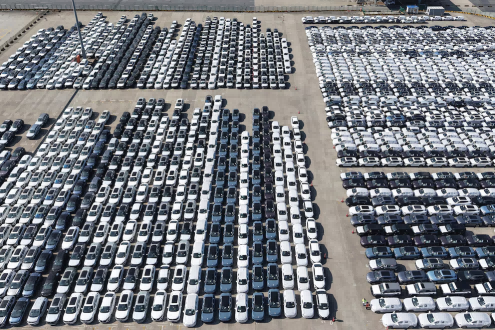
According to the latest analysis by the Argentine media, the import opening policy that has been continuously promoted since 2024 is profoundly changing the pattern of the Argentine automobile market. Data shows that in the first five months of 2023, 65% of new cars sold in the Argentine market were locally manufactured; by the same period in 2026, this proportion has dropped to 34%. At the same time, the share of imported cars from outside South America quicklyclimbed to 25%, with China becoming one of the fastest growing source countries.
Industry insiders believe that the core reason for this round of changes is not a single factor, but the result of the combined effect oftax reform, the removal of import restrictions and duty-free quotas for new energy.
The share of domestic cars has shrunk by nearly half in three years, and China cars are expanding rapidly
Reports show that in 2023, the Argentine market will still be dominated by locally manufactured models. In the first five months, a total of 184,000 new cars were sold, of which 120,000 were locally produced, accounting for 65%; imported cars from Brazil accounted for 28%; and imported cars from other countries and regions accounted for only 7%.
At that time, the sales rankings were almost monopolized by locally produced models, with models such asFiat Cronos, Peugeot 208, Toyota Hilux and Volkswagen Amaroklong occupying the forefront of the market.
However, with the gradual liberalization of import restrictions after the new government takes office in 2024, the market structure has begun to change. Especially in 2025, after Argentina abolished some internal taxes and PAIS taxes, the growth of imported cars accelerated significantly.
By the first five months of 2026, Argentina has registered a total of 232,800 passenger cars and light commercial vehicles. Among them, locally manufactured vehicles account for 34%(approximately 79,000 vehicles), vehicles originating from Brazil account for 41%, and vehicles originating from other countries account for 25%. Compared with three years ago, the market share of local cars is close to halving.
What's even more noteworthy is that among 25% of vehicles of non-South American origin:
China accounts for 14%(approximately 32,100 vehicles);
Mexico accounts for 5%(approximately 11,700 vehicles);
The EU accounts for 2.7%;
South Korea and Thailand together accounted for 1.2%.
This means that China has become one of Argentina's most important non-regional sources of cars.
The duty-free quota of 50,000 new energy vehicles has become an important turning point
The report believes that the time point for the real change in the market structure will occur in the second half of 2025.
The Argentine government previously approved a duty-free import quota for 50,000 hybrid and pure electric vehicles, and allowed related vehicles to enter the market one after another. A large number of new energy models have begun to enter Argentina with zero-tariff status, and a considerable number of them come from China.
Prior to this, under the ACE14 agreement signed between Argentina and Brazil, cars from countries outside the region were usually subject to a 35% import tariff. Therefore, duty-free quotas for new energy actually open an important channel for China cars.
At the same time, Argentina's foreign exchange controls have been gradually relaxed, making it easier for importers to obtain foreign exchange, which has further promoted the growth of imported cars.
For China auto companies, this round of policy changes has directly brought about an increase in market share; for export companies interested in deploying the Argentine market in the future, new energy models have become one of the most important growth directions.
The future import window will continue to expand
The report pointed out that Argentina is promoting more trade arrangements. Among them: preferential quotas for Europe will take effect in 2026, with a quota of 10,000 vehicles in the first year, andtariffs will be halved to 17.5%; the United States is also expected to launcha zero-tariff quota of 10,000 vehicles per year this year; the automobile trade agreement with Mexico is expected to be updated in the next few months.
If all these arrangements are implemented, there will be room for further improvement in the proportion of imported cars in the Argentine market.
However, for the local automobile industry, the pressure is also increasing simultaneously. Data shows that Argentina's automobile production in the first five months of 2026 fell by 19.3% year-on-year, much higher than the decline in exports. This means that the biggest impact at present is not exports, but the continued erosion of local market share by imported cars.
written in the end
The Argentine market is undergoing an obvious process of "importing instead of domestically produced", and China cars are one of the biggest beneficiaries. For China's auto exporters, the most noteworthy thing is not the current market share of 14%, but the policy direction has changed: import thresholds have been lowered, the foreign exchange environment has improved, and new energy enjoys special channels. In the next few years, Argentina may become one of the most noteworthy incremental markets in South America. However, what needs to be noted is that the current growth mainly occurs in the new car sector, especially new energy products. For used car exporters, it is more important to continue to pay attention to Argentina's subsequent changes in vehicle access, vehicle age restrictions and import policies, because these factors will determine whether a real used car import window will emerge in the future.
Source: Guangdong Good Car
[Disclaimer] The content of this website (including pictures and texts) originates from the Internet, and the copyright belongs to the original author. Respect the rights and interests of originality, and select content is only used for information sharing. If copyright disputes are involved, please contact us to handle them in a timely manner
Keywords: Zero-tariff new energy quotas are in full swing: China has become Argentina's third largest source of cars
Related Information
Company News
-
Take advantage of the east wind of the "Belt and Road" and deeply explore the Cambodia automobile market| DG MOTORS Phnom Penh Store, Overseas Store in China (Chongqing Banan) Used Car Export Base, moves to a new location and opens grandly
Time:2026-03-24
-
Huanyu Automobile signed an agreement on the coordinated development of national used car export bases and joined hands with 7 major bases to expand new channels to sea.
Time:2026-06-12
-
Twenty-six years of hard work| Huanyu Automobile's 26th anniversary celebration and veteran employee commendation meeting were successfully held
Time:2026-06-08
-
Chongqing's 2026 second-hand car purchase subsidy policy will be officially implemented. Huanyu Automobile will be included in the officially designated declaration point
Time:2026-05-19
-
Implementation of new tariff policy in Cambodia| Consul General Wen Weiye visited China (Banan, Chongqing) used car export base to explore new opportunities for second-hand new energy vehicles going abroad
Time:2026-04-02
-
China (Chongqing·Banan) used car export base: Linking the world, quality and good cars go to the world
Time:2026-03-24
-
Fu Yi was invited to participate in the New Year Friendship Meeting of Foreign Consulate General in Chongqing and overseas business institutions in Chongqing
Time:2026-02-06
-
Chongqing RCEP Investment and Trade Service Center's Chongqing Car Overseas Business Unit was officially unveiled
Time:2025-12-31
-
The synergy of "platform+enterprise+service" empowers the Chongqing RCEP Service Center to add wings to the "Chongqing Car Going Global" initiative
Time:2025-12-30
-
Chongqing Banan Second hand Car Export Base signs contract with RCEP Service Center to jointly promote 'Chongqing cars going global'
Time:2025-12-29
-
China (Chongqing Banan) Second hand Car Export Base VR Reality officially launched
Time:2025-12-24
-
Chongqing Banan Second hand Car Export Base welcomes multi-party inspections to discuss the plan for Chongqing cars to go global
Time:2025-12-23
-
Vice Director Zhou Chengqing of Banan District People's Congress conducted research on Huanyu Automobile Company
Time:2024-12-27
-
Xu Jianghai, a member of the Standing Committee, visited Huanyu Automobile Company for research and discussed the development of a second-hand car export base
Time:2024-11-20
-
Huanyu Automobile joins hands with Eurasian partners to seek a new chapter in the export of new energy used cars
Time:2024-09-22
Industry Insights
-
Zero-tariff new energy quotas are in full swing: China has become Argentina's third largest source of cars
Time:2026-06-17
-
Uzbekistan liberalizes restrictions on individual car purchases: the era of only one car imported a year is over
Time:2026-06-16
-
Imported 1.9 million cars in two years: China has become a supplier to Saudi Arabia, and the market structure is reshaping
Time:2026-06-15
-
Egypt's electric vehicles begin to speed up: a cumulative import of more than 28,000 vehicles in five years, adding 1600 vehicles in a single month to a high level
Time:2026-06-11
-
9756 kilometers, 4809 vehicles: the full export link of cars in a ro-ro ship
Time:2026-06-10
-
Russia's new car imports doubled in May: China accounted for 73%, and the source pattern of used cars is also changing
Time:2026-06-09
-
Russia strikes again! The Eurasian Union's gray import channel for automobiles has been completely blocked, and new restrictions will be dynamically increased
Time:2026-06-08
-
Ukraine customs strike hard! Starting from June 8, half of the import of used cars will be subject to centralized strict inspection and will continue until the end of 2026
Time:2026-06-05
-
Starting from China! Changan Mazda's new direction
Time:2026-06-04
-
Entering South America, exporting new energy vehicles will lead to the next 100 billion track
Time:2026-06-04
-
Rereport depth| From "repeated inspections" to "full mutual recognition", Chongqing Maritime Innovation Supervision Services Help "Chongqing Vehicles Going to Sea" Reduce Costs and Speed Up
Time:2026-06-03
-
The top 10 countries in total real used car exports of China from January to May 2026
Time:2026-06-02
-
High oil prices once again shake the fundamentals of oil trucks, Kenya exempts the first 100,000 imported electric vehicles from tariffs
Time:2026-05-27
-
Nansha VS Horgos: Who is your ship?
Time:2026-05-26
-
The wind outlet has arrived! The used car markets of five South American countries ushered in a golden period
Time:2026-05-25
-
Russia's imports of used cars from China have surged 2.4 times in four months: Top ten imported models announced
Time:2026-05-21
-
Hailao Used Car Export Briefing·May 11, 2026
Time:2026-05-21
-
Growth rate of 35%! South America has become a new outlet for China's exports, and the profits of these five countries surpass Africa
Time:2026-05-20
-
Oil shortage drives Africa to shift to electrification, with Ethiopia accounting for 1/3 of China's exports of African tramcars
Time:2026-05-20
-
Heavy! Canada officially liberalizes the import of new energy vehicles from China. Is the North American market the next outlet?
Time:2026-05-20
-
New energy vehicles sail to Southeast Asia, and RCEP brings three major dividends
Time:2026-05-19
-
Want to bring your car into Mexico legally? First go through taxes, NOM and customs declaration agency
Time:2026-05-19
-
Kazakhstan issues new regulations: imposing punitive scrapping taxes on imported cars from Russia and Belarus
Time:2026-05-19
-
China and the United States establish a new positioning for "constructive strategic stable relationship"
Time:2026-05-15
-
China's used cars are popular in Algeria, but the lack of parts is a worry: intermediaries sell quickly, but maintenance cannot keep up
Time:2026-05-15
-
Chongqing Huanyu Automobile's senior management meets with representatives from Turkmenistan to jointly explore a new blueprint for second-hand car exports
Time:2024-12-05
-
The "Three Visits and Three Questions" Research Symposium of the Second Taxation Branch of Chongqing Taxation Bureau was held at the Huanyu Haoche 5S Store
Time:2024-10-18
Export Policy
-
Vehicle import costs surge in more than 6 years: Georgia's new regulations reshape the Caucasus car trade route
Time:2026-06-10
-
Received an order for 100 units! Nigeria becomes a new blue ocean for China's used car exports
Time:2026-06-09
-
What are second-hand exports waiting to be transferred? How to handle it? Need things?
Time:2026-06-05
-
[Russian New Regulations] SPOT cargo pre-confirmation system is officially implemented
Time:2026-06-04
-
Belarusians are crazy about "overseas shopping" used cars: individuals imported 38,000 vehicles, and SUVs became the protagonist
Time:2026-06-03
-
Heavy benefits: starting from July 1| Tariffs on used car exports to Nigeria drop sharply
Time:2026-06-02
-
Russia's "United Arab Emirates Low-Price Car" scam broke out: imported cars five times cheaper, but no car was seen later
Time:2026-06-01
-
What certification requirements are needed to export used cars to Africa?
Time:2026-05-29
-
From 4000 to 25000: The African electric vehicle market is starting to grow, and second-hand new energy exports are worthy of attention
Time:2026-05-29
-
With the implementation of the ceasefire in the Middle East, China's second-hand car exports have ushered in a phased explosion
Time:2026-05-29
-
Russia's "parallel import" craze 20 cars released: Mazda CX-5 tops, SUVs continue to dominate the market
Time:2026-05-28
-
How to Choose High-Quality Left-Hand Drive Used Cars for Export | A Complete Guide for Importers
Time:2026-05-27
-
Common Mistakes to Avoid When Importing Cars to Russia | 2026 Guide for Importers
Time:2026-05-26
-
Algeria urgently refutes rumors: New rules on used car imports have not been officially announced within 10 years of opening
Time:2026-05-26
-
Moldova's car market has exploded nearly fourfold in five years: Chinese-made vehicles account for 40% and electric vehicles account for 30%
Time:2026-05-25
-
Inventory of popular used car models in Ghana in 2026
Time:2026-05-22
-
Full interpretation of the 2026 new regulations on used car exports to Nigeria
Time:2026-05-22
-
Title: Top 5 Cost-Effective LHD SUVs for Nigeria Export 2026 | Zero-Tariff EV Options Included
Time:2026-05-22
-
Interpretation of the new regulations on used car exports from Ghana
Time:2026-05-21
-
Title: Senegal Used Car Import Rules 2026 | LHD Only, Age Limit & Certification Guide
Time:2026-05-21


Contact Us
Address.: 1-1, Longzhou Boulevard No. 2899, Banan District, Chongqing, China.
E-mail:hyu55002@gmail.com
Tel:+86 400-636-0012
Phone:+86 158 2345 6606
WhatsApp:+86 15823456606
Get In Touch
Ready to take the next step? We’d love to hear about your upcoming project.

Mobile Version

VR
Copyright © 2026 Chongqing Huanyu Automobile Sales Co., Ltd. All Rights Reserved. Powered by: www.300.cn
WhatsApp:8615823456606
Phone:+86 158 2345 6606
Tel:+86 400-636-0012
E-mail:hyu55002@gmail.com
Business Cards
Intelligent Customer Service